
Persistent workers
Initialize once. Reuse across operations.
THE MODERN INTEGRATION WORKSPACE
Connect your systems. Transform your data. Build and test integration flows visually—with persistent workers, reusable resources, and deployment on your infrastructure.
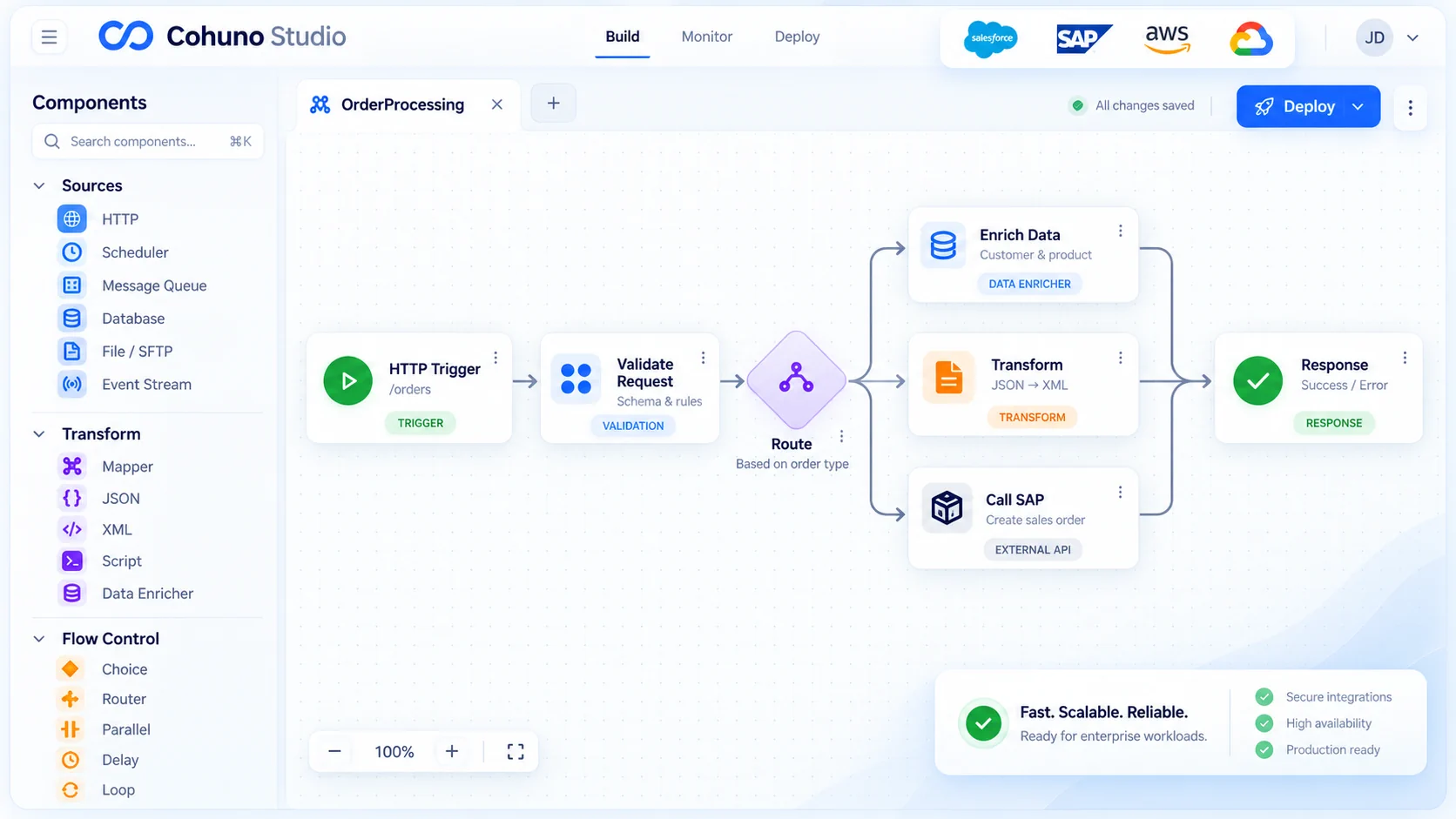
Initialize once. Reuse across operations.
Prepare resources before business traffic.
Design, inspect, and refine your flows.
Build application archives for your runtime.
APIs, messaging, files, and databases.
Inspect activity traces and outputs.
MEASURED LARGE-FILE ETL
A 1.37 GB CSV read stage sustained about 126,000 rows per second with 94.29 MiB peak process memory (RSS) in a checksum-verified internal test.
Shared Linux container · synthetic input · native read stage, including parse, output write and checksum. Results vary by workload; no competitor was measured.
See the benchmark method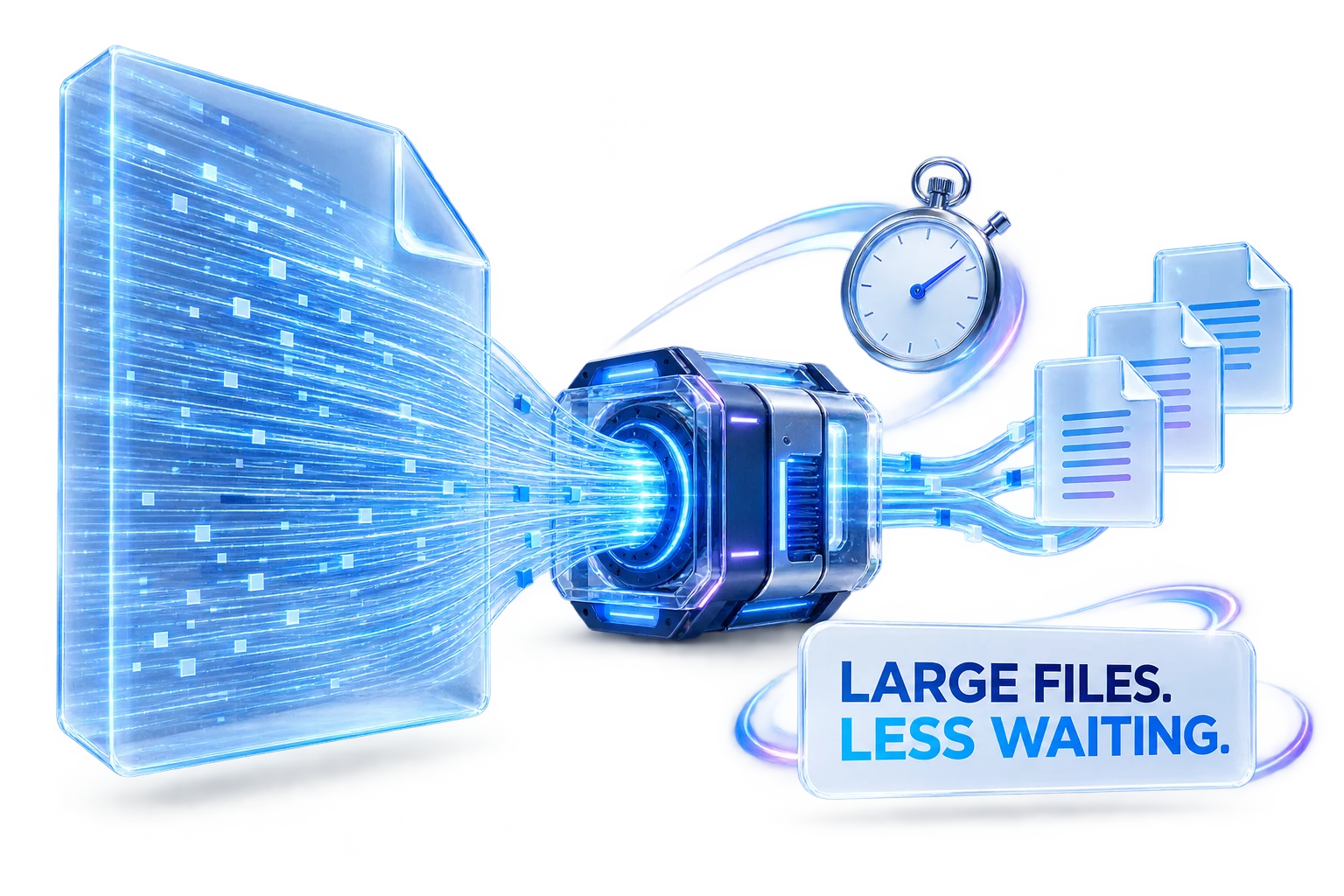
INTEGRATION WITHOUT THE OVERHEAD
Show us your invoice and we cut it by 40%.
Same capabilities. Lower cost. No DevOps for you.
TIBCO · MuleSoft · Talend · Informatica
Your new invoice
MEASURED IN OUR INTERNAL TEST
Median warm engine execution for the bundled 17-activity order-fulfilment flow.
Python compatibility runtime · simulated external connectors · engine-only. Excludes prewarming, API transport, and database persistence. Not a competitor benchmark.
Read the methodologyEFFICIENCY BY DESIGN
Put resource reuse and deployment choices at the center of your integration architecture. Measure the result on your own infrastructure.
YOUR IDE FOR INTEGRATION
Switch between files, components, source control, and runtime tools. Give the canvas more room when you need it.
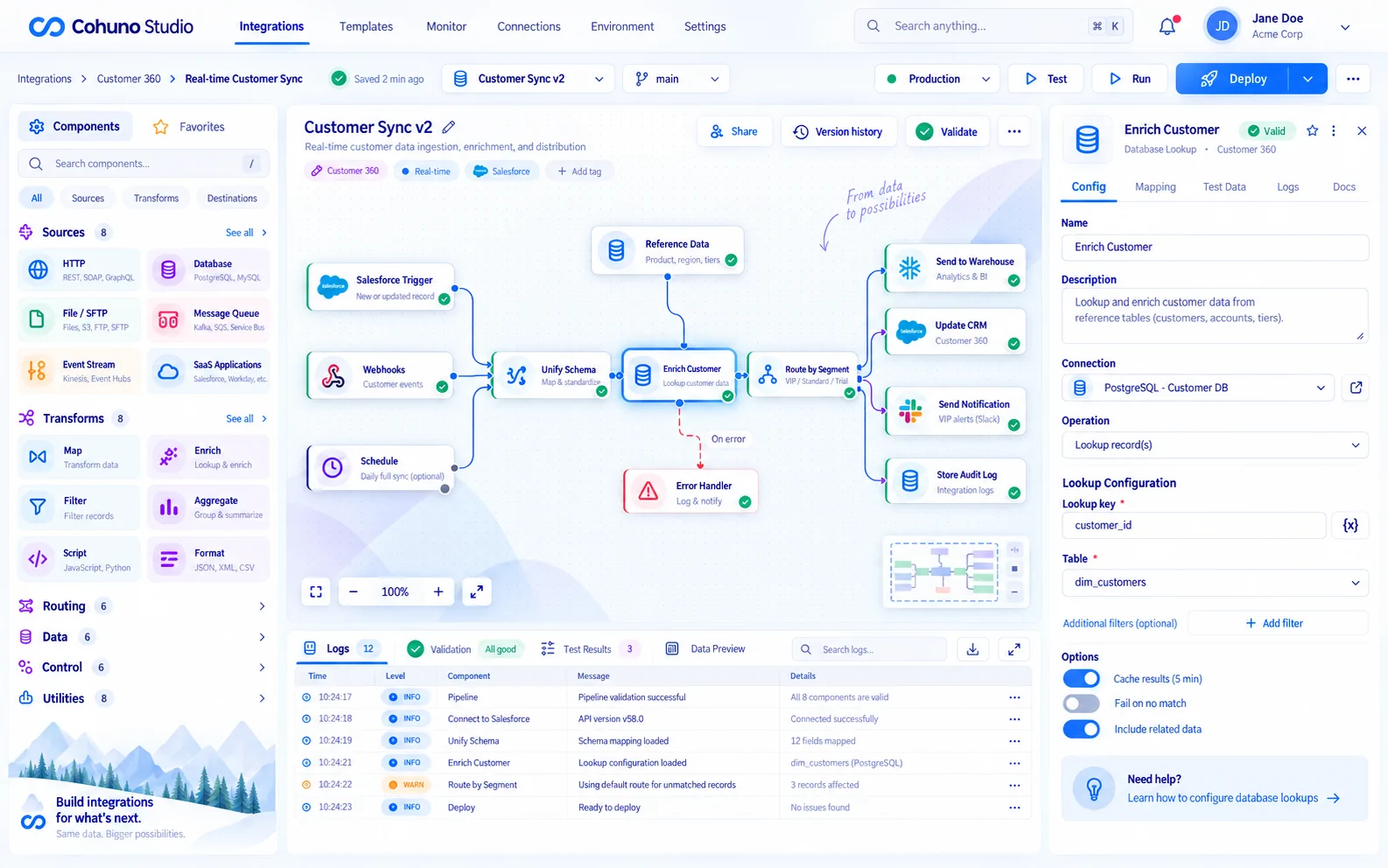
Keep credentials out of your process graph. Configure connections on the server, then reference them from the Studio.
Deployment guidanceInspect project files, reuse mapping resources, and work with existing Git tooling. Move from a local test to an application archive.
Explore the workspaceAPIs. Data. Workflows.
A clear path from idea to integration.